I was born and raised in Brooklyn, New York—Brighton Beach, to be exact. I went to PS 225 and later Lincoln High School. Back then, life was simple, but it didn’t mean it was easy.
In 1944 and 1945, I came down with pneumonia—twice. This was before penicillin was widely available. The first time, I was in bed for four weeks. The second time, six weeks. Both times, I nearly died.
Those experiences stayed with me. They damaged my lungs and made me prone to pneumonia for many years afterward. I had it several more times in my younger days. One doctor even told me I probably wouldn’t make it past 75 or 80. His reasoning was simple—if I got pneumonia again at that age, it would likely be the end.
Well, I’m still here.
Sometimes the Right Advice Comes from Unexpected Places
About 20 years ago, my wife was seeing a chiropractor named Julie McLean. I had a stiff neck, so I decided to give it a try. That visit turned into a weekly habit, and I’ve continued ever since.
Interestingly enough, I haven’t had pneumonia since I started going regularly.
(If you’re curious, I wrote more about that in another article on why it’s important to see a chiropractor even if you have no painSo why is it important to see a chiropractor even when you are not in pain?.)
A Misdiagnosis That Could Have Changed My Life
Not long before that, I had a doctor who diagnosed me with Parkinson’s disease—simply because I lost my balance for a moment while walking a straight line. He also told me I had a hernia and would need surgery.
That didn’t sit right with me.
So I went to a new doctor, Dr. Nimmagadda. On my first visit, he asked what conditions I had.
I told him, “Parkinson’s disease.”
He looked at me and said, “You don’t have Parkinson’s.”
I asked how he could be so sure. He said, “If you had it, your face would show very little expression. The first thing it affects is the muscles in your cheeks. You have one of the most expressive faces I’ve ever seen.”
That was the end of that diagnosis.
Then I told him about the hernia and the surgery I’d been told I needed.
He asked me a simple question: “Do you know how to do a plank?”
I said, “No.”
He showed me.
Then he said something I never forgot: “If you can do a plank every day, you may not need surgery.”
The Beginning of a Simple Habit
That’s how it all began.
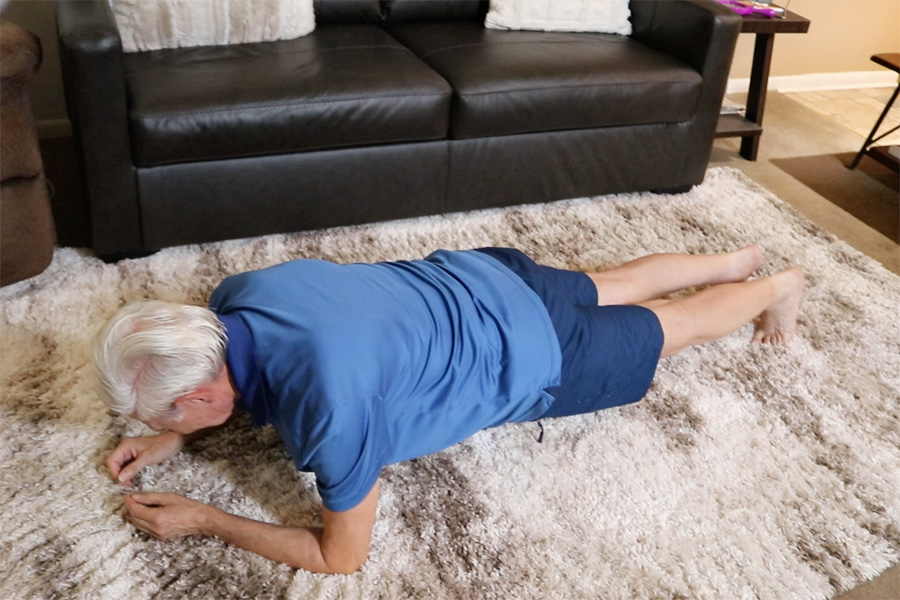
I started doing planks every day. Not perfectly. Not for long at first. Just consistently.
That was over 20 years ago.
Today, I still have that hernia—and I can still do a seven-minute plank.
No surgery.
No shortcuts.
Just consistency.
What This Has to Do With Triceps
Now you might be wondering—what does all this have to do with triceps?
More than you think.
When you hold a proper plank, your triceps are working the entire time. They help stabilize your arms and support your body weight. Along with your shoulders and core, they play a quiet but important role.
Strong triceps aren’t just for appearance. They help you push yourself up out of a chair, steady yourself if you stumble, and maintain control in everyday movements.
That’s the kind of strength that matters as you get older.
Strength That Serves You for Life
Over the years, I’ve learned that the goal isn’t to build flashy muscles. It’s to build useful strength.
Triceps are a good example of that.
You use them when you:
- Push yourself up from a seated position
- Brace yourself during a fall
- Carry or push objects
- Hold your body steady in movements like planks
These are small things—until one day they aren’t.
Practical Takeaways
- Start with simple exercises like planks that use multiple muscle groups
- Focus on consistency rather than intensity
- Pay attention to movements that support daily life, not just workouts
- Don’t rush into surgery without exploring reasonable alternatives
- Find professionals you trust—and don’t be afraid to get a second opinion
A Simple Checklist to Get Started
- ☐ Try holding a plank for 10–20 seconds
- ☐ Gradually increase your time each week
- ☐ Keep your body straight—no sagging or arching
- ☐ Stay consistent (daily if possible)
- ☐ Pay attention to how your body responds
A Thought Worth Remembering
“It’s not what you do once in a while. It’s what you do every day that carries you through life.”
Closing Thoughts
I’ve had my share of medical scares, misdiagnoses, and tough decisions. But I’ve also learned that simple habits, done consistently, can carry you a long way.
That one conversation about a plank changed my life.
You never know which small step will change yours.
There’s more to my story, so be sure to come back next week and continue the journey with me.