Many people focus on big muscles as they get older — legs, back, maybe their heart health. But one area that often gets ignored is the forearms. I’ve learned over many decades that forearm strength quietly supports many of the things that help you stay independent as you age.
Simple things like opening jars, carrying groceries, maintaining grip strength, and even preventing falls all depend more on your forearms than you might realize.
The good news is you don’t need a gym or fancy equipment to keep them strong. I’ve always preferred simple exercises I can do right at home.
A Simple Forearm Exercise I’ve Used for Years
One easy way to strengthen your forearms is with a lightweight object and the edge of a table. You don’t need anything heavy. In fact, lighter weight with good control is often better.
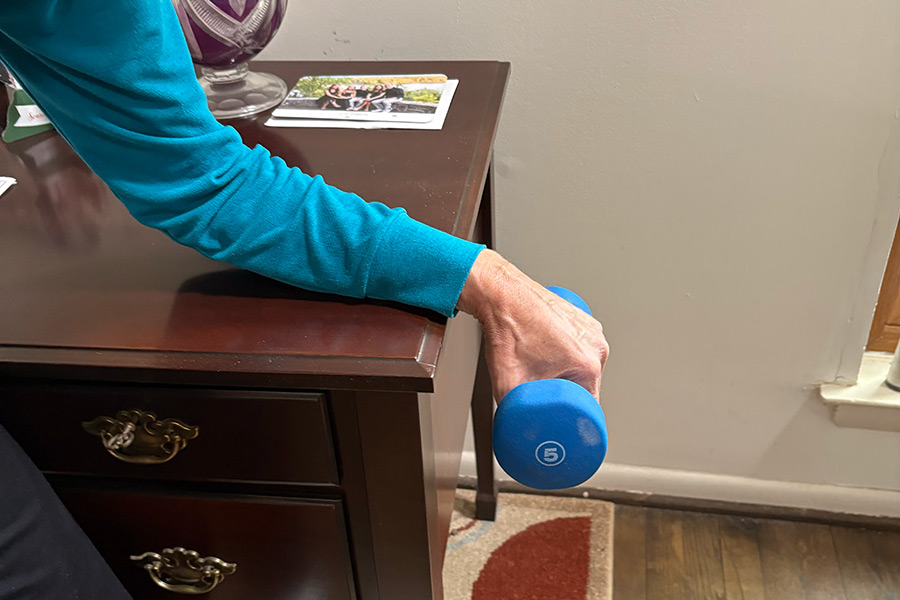
Sit beside a table and rest your forearm on the surface with your wrist hanging just over the edge. Hold a small object in your hand — something like a light dumbbell, a small book, or even a household item with some weight.
Start with your palm facing downward.
Slowly raise the object by bending only your wrist. Do not move your elbow or shoulder. Just the wrist. Then slowly lower it back down.
Move in a controlled and comfortable way. This is not about speed. It is about control and consistency.
Do as many repetitions as feel comfortable for you.
Turn Your Hand and Repeat
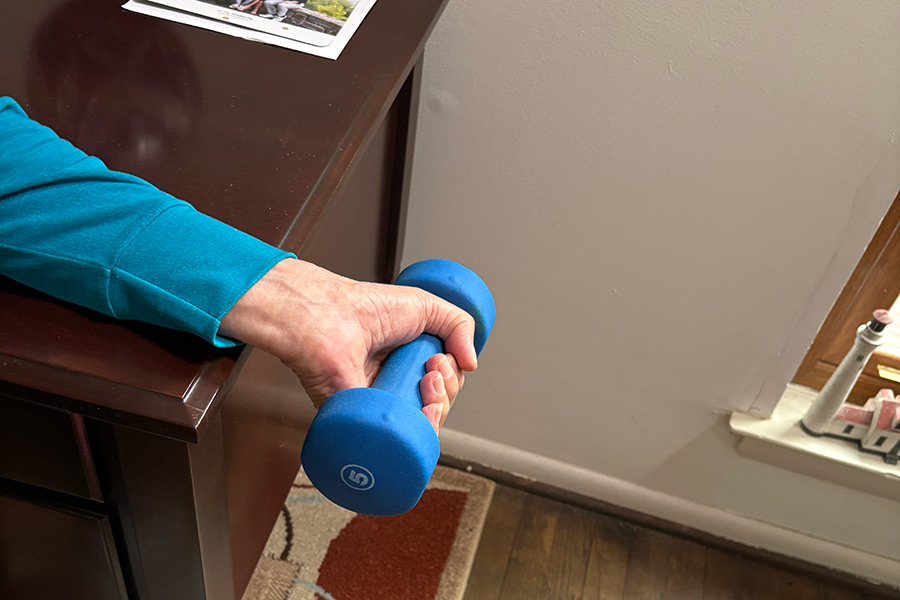
Next, turn your forearm so your palm faces upward.
Repeat the same slow lifting motion using only your wrist. This works the opposite side of the forearm and helps create balanced strength.
I like to think of this as maintaining all the small support systems that keep your hands working properly.
Train Your Brain While You Train Your Muscles
One thing I like to do during these exercises is use my countdown method to keep my mind active. Instead of just counting forward, I count backward. Sometimes by ones, sometimes by threes or sevens.
This turns a simple muscle exercise into a mental exercise too.
You can read more about that here: mental exercising by counting your reps in reverse.
It helps reduce boredom and keeps your brain engaged while your body works.
Switching to the Other Hand
To work your right hand, simply rotate your body 90 degrees clockwise, step back slightly from the table, and repeat the same process with the other arm.
Take your time. There is no prize for rushing. The goal is steady improvement over time.
Why I Believe Small Exercises Matter
At 90 years old, I can tell you this from experience: it is often the small daily habits that make the biggest difference later.
Big efforts done once in a while are not nearly as valuable as small efforts done consistently.
Forearm strength supports grip strength. Grip strength has been associated with overall strength and functional ability as people age. It is only one small piece of the puzzle, but every small piece helps.
Practical Tips to Get Started
- Start with very light weight
- Move slowly and with control
- Stop before discomfort or strain
- Keep the rest of your arm still
- Breathe normally
- Focus on consistency rather than intensity
My Personal Rule
Take care of the small things and the big things take care of themselves.
This applies to muscles, joints, habits, and even attitude.
Final Thought
You don’t need complicated routines to stay strong. You just need simple exercises done regularly with patience.
Start small. Stay consistent. Keep moving.
Your future self will thank you for it.