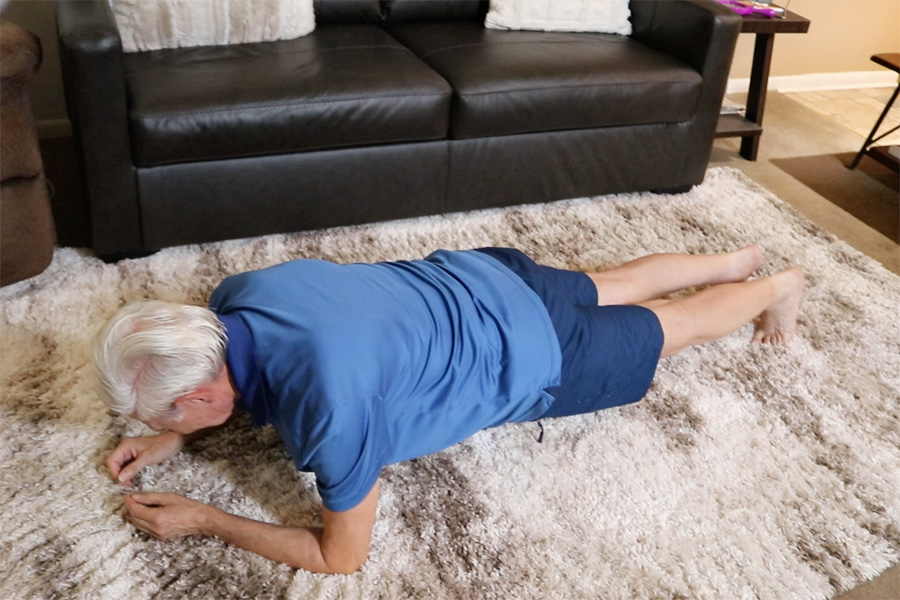
Performing planks is one of the simplest and most effective ways I know to strengthen your abdominal muscles. Over the years I have learned that strength in this area is about much more than appearance.
Of course, there is nothing wrong with wanting to look good. Taking pride in your appearance can be a very healthy thing. But strong abdominal muscles serve a much more important purpose — they help support your body as you move through daily life.
A strong core helps you maintain better posture, supports your back, and may help reduce the risk of certain physical problems such as strains or even hernias as the years go by. At my age, I think more about staying capable than looking impressive.
The Real Challenge With Planks
If you have ever tried holding a plank for any length of time, you probably discovered the real difficulty is not just the muscles — it is the boredom.
Holding still and staring at the floor while your muscles begin to shake can feel like the longest minutes of your day. The mind wants to quit long before the body actually needs to.
When I performed my 7-minute plank, I stayed engaged by giving my mind something to do. In my case, I worked on solving a mathematical problem while holding the position. Keeping my mind occupied helped the time pass and kept me from focusing on the discomfort.
Now, not everyone enjoys doing math while exercising, and most people should not start with a 7-minute plank anyway. Like most things in life, this is something you build gradually.
Start Small and Progress Slowly
A much better approach is to begin with shorter planks and slowly increase your time. One method I recommend is using the Count Your Reps in Reverse program.
The idea is simple:
- Choose a number to count down by
- Select how many repetitions you want to start with
- Press start and begin your plank
Each day you practice, try increasing your repetitions by just one. That may not sound like much, but small improvements done consistently add up faster than most people expect.
At 90 years old, I can tell you this: slow progress that you stick with always beats fast progress that you abandon.
Train Your Mind While You Train Your Body
As you get stronger, you can also make the exercise more interesting by increasing the mental challenge. For example, you might count backward by sevens instead of threes, or pick another number that requires a little more concentration.
This gives you two benefits at the same time:
- You are strengthening your body
- You are keeping your mind active
I have always believed that keeping both the mind and body working together is one of the best habits for long-term health.
“If you want to last a long time, don’t just exercise your muscles. Exercise your attention.”
A Simple Progression Plan
If you are just getting started, here is a simple way to approach it:
- Start with a plank you can safely hold (even 10–20 seconds is fine)
- Practice consistently rather than occasionally
- Add a small amount of time or one repetition each session
- Keep your mind engaged while you hold the position
- Focus on steady improvement, not perfection
This kind of gradual progression is how most real strength is built — not through heroic efforts, but through quiet consistency.
An Important Word of Caution
Planks are not for everyone. If you have shoulder problems such as a rotator cuff injury, or other related physical conditions, this exercise may not be appropriate for you.
If you have any doubts, talk with your physician before starting. There is no wisdom in pushing through something that could cause injury. The goal is longevity, not shortcuts.
Final Thoughts
You do not need to start with a 7-minute plank. You only need to start where you are.
What matters most is building the habit, improving a little at a time, and finding ways to stay mentally engaged so you actually stick with it.
Strength is built slowly. Discipline is built daily. And both of them together can carry you much farther than you might expect.
Just start small. Then improve a little tomorrow.